
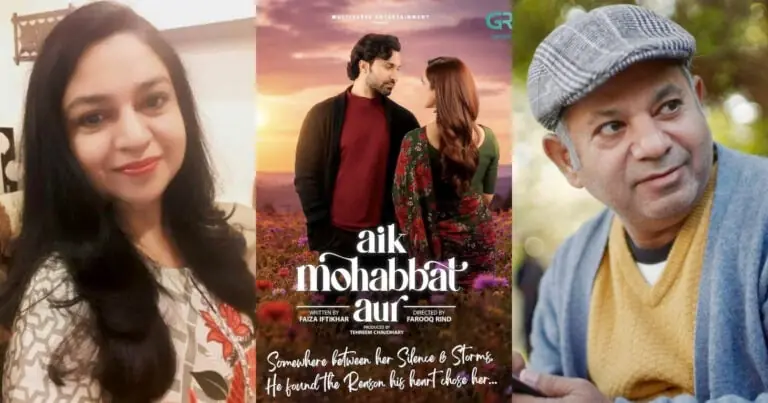
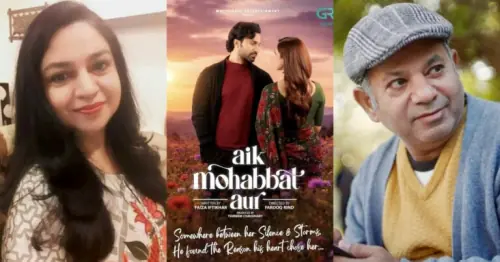
The intricate world of television drama, a realm where creative visions often intertwine, has recently witnessed a notable public divergence. Acclaimed writer Faiza Iftikhar, celebrated for her compelling narratives and nuanced character development, has openly expressed her dissatisfaction with director Farooq Rind’s handling of her drama, Aik Mohabbat Aur.
This public ‘dig’ from a writer of Iftikhar’s stature sends ripples through the industry, highlighting the perennial tension that can arise between the original creator’s vision and the director’s interpretation. Faiza Iftikhar, whose previous works have garnered widespread critical acclaim and audience adoration, is known for her meticulous approach to storytelling. Her critique suggests a significant disconnect between her written word and its on-screen manifestation under Rind’s direction.
Such disagreements are not uncommon in the collaborative art of filmmaking and television production. A writer pours their soul into crafting a story, developing characters, and shaping dialogues, envisioning a specific emotional and thematic landscape. The director, tasked with translating this vision into a visual medium, makes countless creative decisions regarding casting, pacing, cinematography, and performance, which can sometimes deviate from the writer’s original intent.
While the specifics of Iftikhar’s critique remain a subject of industry discussion, her public stance underscores the importance of creative synergy and mutual respect in bringing a story to life. When a writer feels their work has been misrepresented or its essence diluted, it often sparks a broader conversation about artistic integrity and the hierarchy of creative control within production houses.
For viewers and industry insiders alike, this incident serves as a poignant reminder of the delicate balance required in adapting written works for the screen. It emphasizes that a successful adaptation is not merely about translating words into images, but about preserving the soul of the narrative while embracing the unique demands of the visual medium. The ongoing conversation around Aik Mohabbat Aur now extends beyond its plot, delving into the very process of its creation and the often-complex relationship between the pen and the lens.




Comments