
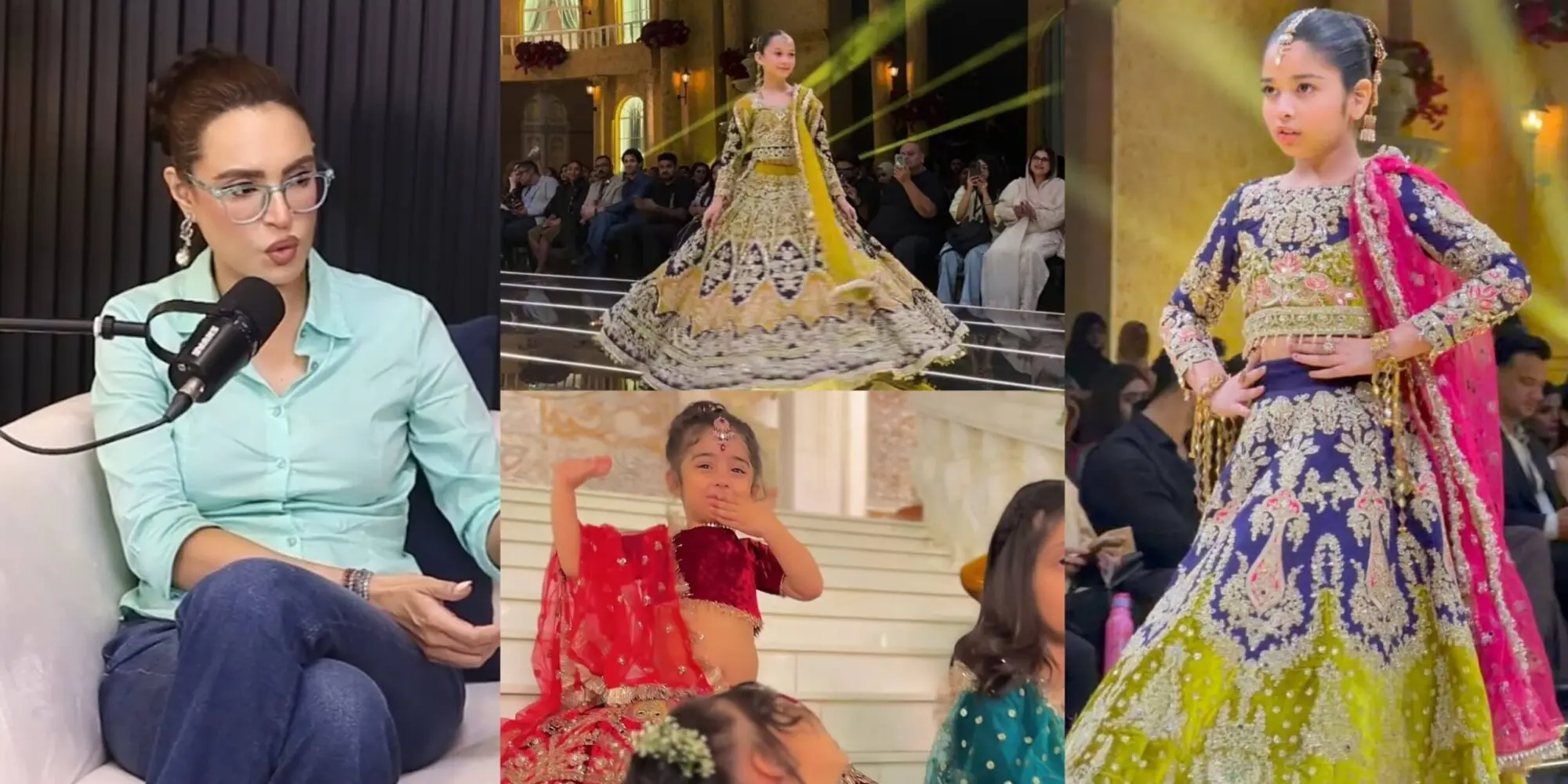
The world of fashion, often a kaleidoscope of glamour and controversy, has once again found itself at the heart of a heated discussion, this time centered on the contentious practice of child modelling. Leading the charge in its defense is none other than the outspoken supermodel and entrepreneur, Nadia Hussain, whose recent remarks have reignited a long-standing debate within the industry.
The controversy gained significant traction following Kashee’s Fashion Week, an event that inadvertently thrust the participation of young children on the runway into the public consciousness. While many voiced concerns about the potential exploitation and premature exposure of minors to the demanding fashion world, Hussain has emerged as a staunch advocate, offering a robust defense of the practice.
Hussain, known for her candid and often unfiltered opinions on industry standards, has consistently maintained that child modelling, when managed responsibly, can be a positive experience. Her stance suggests that under proper supervision and with the right safeguards, children can gain valuable experience, develop confidence, and even contribute to their families’ well-being without compromising their childhood. This perspective aligns with her broader views on professionalism and dedication within the modelling sphere, having previously emphasized the importance of education and preparedness for those entering the industry.
Critics, however, argue that even with the best intentions, child models are vulnerable to pressures that can impact their psychological and emotional development. Concerns range from the objectification of children to the disruption of their schooling and normal social lives. The debate often pits the potential for early career opportunities against the imperative to protect childhood innocence and well-being.
Nadia Hussain’s unwavering support for child modelling underscores a complex reality. For some, it represents a legitimate pathway for young talent, a chance to shine under the guidance of professionals. For others, it remains a practice fraught with ethical dilemmas, demanding rigorous oversight and a re-evaluation of industry norms. As the discussion continues to unfold, Hussain’s voice remains a powerful and polarizing force, challenging conventional wisdom and pushing the boundaries of what is considered acceptable in the ever-evolving landscape of fashion.












Comments